2026 - The Year AI Stops Being Single-Player
Igor Stadnyk, Co-Founder & CEO at INC4 08 January, 202610 mins read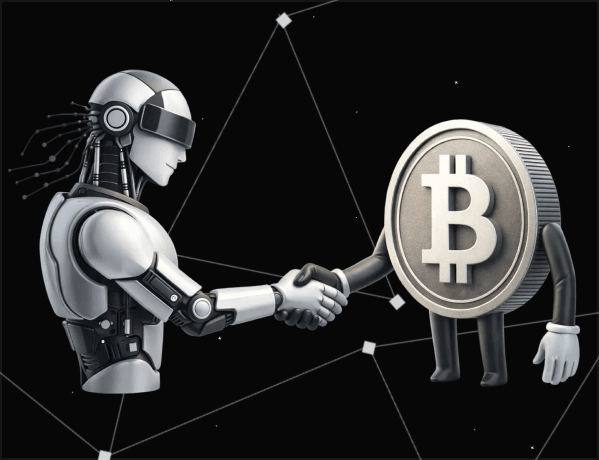
2026 - The Year AI Stops Being Single-Player
At some point in 2025 I realized something strange: almost all my interactions with AI still felt like using an iPhone before the App Store.
One screen. One model. One “assistant.”
A world full of potential, but the doors are still closed.
But the next wave is already visible - not in announcements or benchmarks, but in small personal moments.
Like when you’re talking to your AI and you feel it trying to guess instead of knowing. You ask something about taxes, or legal details, or medical nuance, and the model confidently invents an answer. And you sit there thinking: it would be nice to press a button and bring a real human into this conversation. A lawyer. A doctor. A random genius from Nigeria with three degrees. Whoever actually knows the thing.
And that’s when you see the shift:
AI is going multiplayer.
Not in the research sense, but in everyday use - where different systems no longer work alone, but together, inside a shared context.
This is the moment AI stops being just a tool and starts behaving like an ecosystem.
And this is exactly the space we’re building in: practical AI systems connected to financial infrastructure, designed for real-world use.
At some point in 2025 I realized something strange: almost all my interactions with AI still felt like using an iPhone before the App Store.
One screen. One model. One “assistant.”
A world full of potential, but the doors are still closed.
But the next wave is already visible - not in announcements or benchmarks, but in small personal moments.
Like when you’re talking to your AI and you feel it trying to guess instead of knowing. You ask something about taxes, or legal details, or medical nuance, and the model confidently invents an answer. And you sit there thinking: it would be nice to press a button and bring a real human into this conversation. A lawyer. A doctor. A random genius from Nigeria with three degrees. Whoever actually knows the thing.
And that’s when you see the shift:
AI is going multiplayer.
Not in the research sense, but in everyday use - where different systems no longer work alone, but together, inside a shared context.
This is the moment AI stops being just a tool and starts behaving like an ecosystem.
And this is exactly the space we’re building in: practical AI systems connected to financial infrastructure, designed for real-world use.
From One Brain to Many
The simplest way to imagine the next stage of AI is this:
- your personal AI stops being alone.
Today it tries to do everything — your therapist, your trading assistant, your copywriter, your tax advisor.
Of course it hallucinates. A human trying to do all of that would hallucinate too.
But soon your AI will say:
“Hold on. Let me bring someone in.”
Another agent joins the session.
And suddenly your “chat” becomes a small working group.
It feels completely natural, because real life already works this way. You don’t ask one person for everything.
AI starts matching human logic instead of expecting humans to match AI’s.
From One Brain to Many
The simplest way to imagine the next stage of AI is this:
- your personal AI stops being alone.
Today it tries to do everything — your therapist, your trading assistant, your copywriter, your tax advisor.
Of course it hallucinates. A human trying to do all of that would hallucinate too.
But soon your AI will say:
“Hold on. Let me bring someone in.”
Another agent joins the session.
And suddenly your “chat” becomes a small working group.
It feels completely natural, because real life already works this way. You don’t ask one person for everything.
AI starts matching human logic instead of expecting humans to match AI’s.
Your Digital Twin Grows Up
When AI becomes multiplayer on the inside, it also becomes more personal on the outside.
I already feel this happening.
Switching between AI systems is slowly becoming painful — not because of lock-in, but because your digital twin lives inside your primary model.
It knows:
- the people you follow on Twitter,
- the tone you prefer,
- the risks you avoid,
- the jokes that land,
- the assets you care about,
- the things you never want to see again.
And when it talks back, you start recognizing your own logic in it.
In 2026, this won’t be some “sci-fi companion.”
It will be a practical tool that manages money, time, tasks, and decisions the way you would — just without emotion, stress, or forgetting.
For many people, the twin becomes more “consistent” than they are.
Which is both funny and slightly frightening.
Your Digital Twin Grows Up
When AI becomes multiplayer on the inside, it also becomes more personal on the outside.
I already feel this happening.
Switching between AI systems is slowly becoming painful — not because of lock-in, but because your digital twin lives inside your primary model.
It knows:
- the people you follow on Twitter,
- the tone you prefer,
- the risks you avoid,
- the jokes that land,
- the assets you care about,
- the things you never want to see again.
And when it talks back, you start recognizing your own logic in it.
In 2026, this won’t be some “sci-fi companion.”
It will be a practical tool that manages money, time, tasks, and decisions the way you would — just without emotion, stress, or forgetting.
For many people, the twin becomes more “consistent” than they are.
Which is both funny and slightly frightening.
Crypto Follows the Same Pattern
If you step back, crypto is moving in a similar direction.
We used to measure chains by TPS the way AI labs measure models by benchmarks.
Everyone wanted bigger numbers because numbers sounded like progress.
But the world doesn’t run on benchmarks — it runs on adoption.
$Bitcoin fits into this shift as well.
It no longer behaves like a speculative experiment chasing narratives and hype cycles. Instead, it’s increasingly treated as a base layer of the crypto economy — closer to digital gold than a high-risk asset. Price action may move sideways for long periods, but its role becomes clearer: a neutral, global store of value that everything else is built around.
Just like AI is shifting toward real utility, crypto is now shifting toward things people actually use:
- stablecoin apps, fast retail payments, yield automation, consumer markets, prediction tools.
For example, I spent part of this year looking at how people use stablecoins in countries with wild inflation.
And the pattern is clean:
the moment a “Revolut-level” wallet appears stablecoins become the default money.
Not ideology.
Not Web3 education.
Just usefulness.
In 2026, the best fintech apps will quietly run on stablecoins under the hood.
Users won’t even notice the blockchain.
That’s when the category wins.
And yes, we will see bank-native stablecoins, regional digital currencies, and a new wave of market infrastructure around them.
Crypto Follows the Same Pattern
If you step back, crypto is moving in a similar direction.
We used to measure chains by TPS the way AI labs measure models by benchmarks.
Everyone wanted bigger numbers because numbers sounded like progress.
But the world doesn’t run on benchmarks — it runs on adoption.
$Bitcoin fits into this shift as well.
It no longer behaves like a speculative experiment chasing narratives and hype cycles. Instead, it’s increasingly treated as a base layer of the crypto economy — closer to digital gold than a high-risk asset. Price action may move sideways for long periods, but its role becomes clearer: a neutral, global store of value that everything else is built around.
Just like AI is shifting toward real utility, crypto is now shifting toward things people actually use:
- stablecoin apps, fast retail payments, yield automation, consumer markets, prediction tools.
For example, I spent part of this year looking at how people use stablecoins in countries with wild inflation.
And the pattern is clean:
the moment a “Revolut-level” wallet appears stablecoins become the default money.
Not ideology.
Not Web3 education.
Just usefulness.
In 2026, the best fintech apps will quietly run on stablecoins under the hood.
Users won’t even notice the blockchain.
That’s when the category wins.
And yes, we will see bank-native stablecoins, regional digital currencies, and a new wave of market infrastructure around them.
Prediction Markets Will Explode (Again)
Every election year does the same thing: it pulls crypto money into prediction markets like gravity.
But this time the infrastructure is better, the UX cleaner, and the audience bigger.
When sports-betting behavior mixes with political attention and on-chain liquidity, the numbers go crazy.
We’re going to see a lot of this in 2026 — and later it will feel obvious why it happened.
Prediction Markets Will Explode (Again)
Every election year does the same thing: it pulls crypto money into prediction markets like gravity.
But this time the infrastructure is better, the UX cleaner, and the audience bigger.
When sports-betting behavior mixes with political attention and on-chain liquidity, the numbers go crazy.
We’re going to see a lot of this in 2026 — and later it will feel obvious why it happened.
AI Meets Cybersecurity, and It Won’t Be Pretty at First
One of the more uncomfortable truths:
AI will hack crypto before it protects it.
Blockchains have more than a decade of forgotten contracts and dusty wallets.
Someone will point a strong enough model at the entire chain history and say:
“Show me what’s broken.”
We will see old exploits resurface and new ones appear.
Not because someone is evil — but because compute is cheap and blockchains never forget.
Ironically, this is exactly what will push the next evolution of on-chain security.
AI Meets Cybersecurity, and It Won’t Be Pretty at First
One of the more uncomfortable truths:
AI will hack crypto before it protects it.
Blockchains have more than a decade of forgotten contracts and dusty wallets.
Someone will point a strong enough model at the entire chain history and say:
“Show me what’s broken.”
We will see old exploits resurface and new ones appear.
Not because someone is evil — but because compute is cheap and blockchains never forget.
Ironically, this is exactly what will push the next evolution of on-chain security.
DeSci Finally Gets a Real Opening
I had a funny moment this year talking to researchers from the US, UK, and Singapore.
The American one said, “The experiment may fail, and that’s part of the process.”
The Singapore one said, “Fail? Why would it fail? What exact result do you want?”
The British one sat somewhere between the two approaches.
But the real insight was this:
- talent is now mobile, and science no longer needs institutions.
A researcher can live anywhere, get paid in stablecoins, coordinate through open protocols, and collaborate without bureaucracy.
If 2020–2024 was “AI for research,” then 2025–2026 is “research without borders.”
DeSci Finally Gets a Real Opening
I had a funny moment this year talking to researchers from the US, UK, and Singapore.
The American one said, “The experiment may fail, and that’s part of the process.”
The Singapore one said, “Fail? Why would it fail? What exact result do you want?”
The British one sat somewhere between the two approaches.
But the real insight was this:
- talent is now mobile, and science no longer needs institutions.
A researcher can live anywhere, get paid in stablecoins, coordinate through open protocols, and collaborate without bureaucracy.
If 2020–2024 was “AI for research,” then 2025–2026 is “research without borders.”
Wealth Management for Everyone, Not Just the Rich
There’s a quiet shift happening in consumer finance. AI is now good enough to handle basic personal wealth management. You connect your bank, your wallet, and your stablecoins, and the system takes care of the rest — routing funds, choosing conservative yield, and rebalancing risk in the background.
The real breakthrough won’t be new financial products or complex strategies. It will be the first mobile app that makes all of this feel simple, where people don’t have to think about finance at all. Whoever delivers that experience will take the market.
Wealth Management for Everyone, Not Just the Rich
There’s a quiet shift happening in consumer finance. AI is now good enough to handle basic personal wealth management. You connect your bank, your wallet, and your stablecoins, and the system takes care of the rest — routing funds, choosing conservative yield, and rebalancing risk in the background.
The real breakthrough won’t be new financial products or complex strategies. It will be the first mobile app that makes all of this feel simple, where people don’t have to think about finance at all. Whoever delivers that experience will take the market.
So What Does 2026 Actually Look Like?
It does feel like a big tech shift — but not in a loud or dramatic way. It feels smooth, continuous, and almost expected. Intelligence stops being something you “use” and starts becoming part of the environment you operate in.
As Kevin Kelly once said, “The business plans of the next 10,000 startups are easy to forecast: take X and add AI.” In 2026, it’s not about adding AI — it’s about everything already being shaped around it, in ways that feel natural, inevitable, and hard to reverse.
AI becomes multiplayer.
Crypto becomes invisible.
And the two merge into the default interface for work, money, and decision-making.
The future doesn’t come as a big innovation.
It comes as lots of small moments that suddenly feel natural.
And 2026 will be full of those moments.
So What Does 2026 Actually Look Like?
It does feel like a big tech shift — but not in a loud or dramatic way. It feels smooth, continuous, and almost expected. Intelligence stops being something you “use” and starts becoming part of the environment you operate in.
As Kevin Kelly once said, “The business plans of the next 10,000 startups are easy to forecast: take X and add AI.” In 2026, it’s not about adding AI — it’s about everything already being shaped around it, in ways that feel natural, inevitable, and hard to reverse.
AI becomes multiplayer.
Crypto becomes invisible.
And the two merge into the default interface for work, money, and decision-making.
The future doesn’t come as a big innovation.
It comes as lots of small moments that suddenly feel natural.
And 2026 will be full of those moments.